About
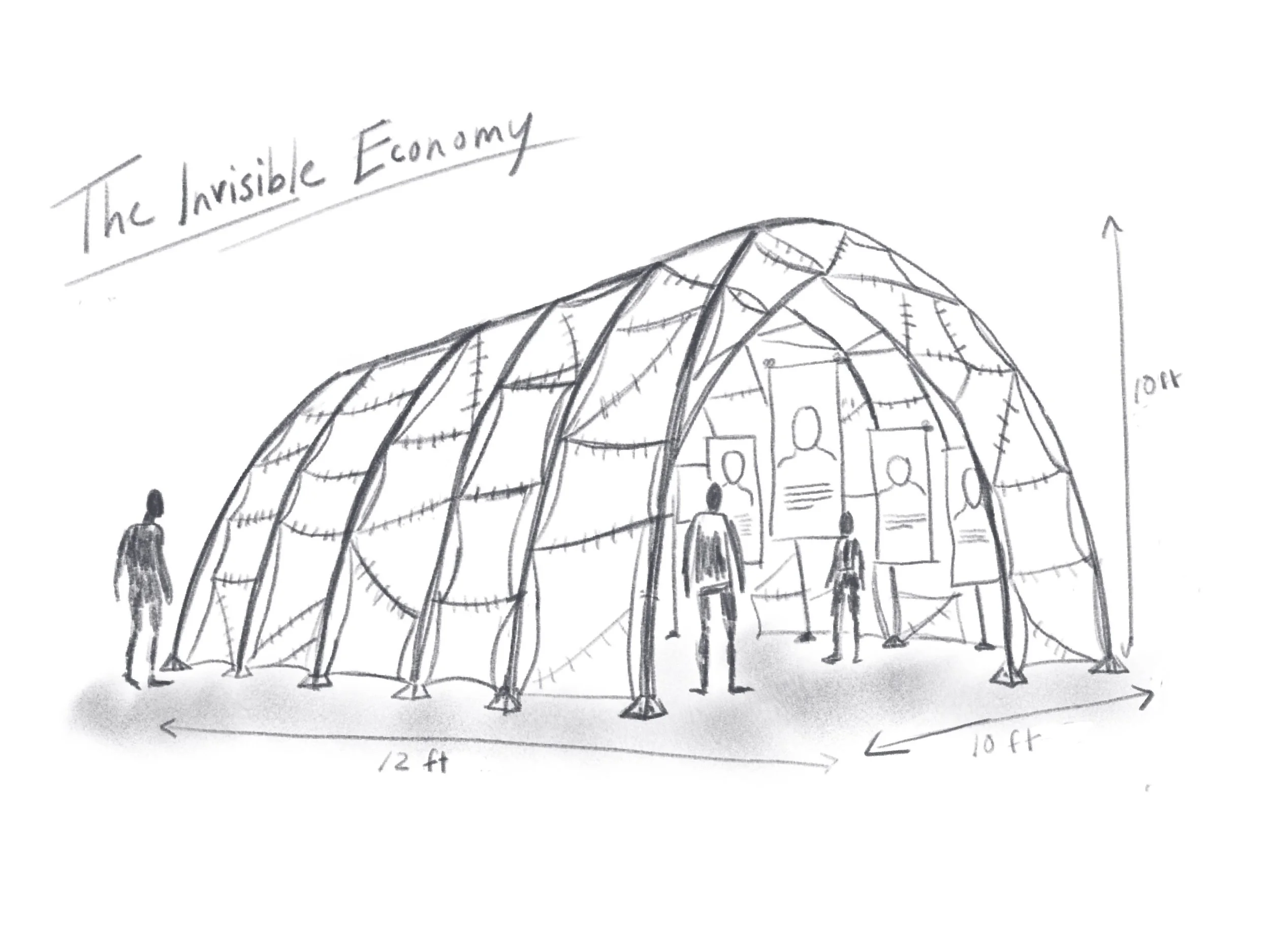
The Invisible Economy
Conceived for Burning Man 2027, The Invisible Economy will be co-created through paid collaboration with makers in Maranhão, Brazil, transforming locally discarded clothing and agricultural sacks into a hand-stitched pavilion. Inside, fabric portraits and audio stories will introduce the people whose creativity shaped the work. The project draws on the history of my great-great-grandmother, Chames Aboud, who emigrated from Zahle to Brazil in 1889 and founded Casa Otomana in São Luís in 1904. It also builds on my connection with Coroadinho through my Burning Man sculpture Flamin-go with Love, which helped fund basic income for community members through sales of its digital version.
Textile production often obscures the labor and environmental costs behind what we consume. Chames’s pursuit of independence through textile commerce becomes a starting point for examining how value is created and recognized. Reuse, creative employment, and shared authorship bring that inquiry into the present. Fabric becomes a place where family history meets our responsibilities toward one another and the materials we consume.